Community
8/1/25
.svg)
The SketchUp Design Sprint Challenge 2025
The brief: Design 500 sq ft for 2050 that creates a positive social impact.
To mark our milestone 25th anniversary of creative software development, we invited our global user community to participate in an intense test of rapid spatial intuition. The challenge was simple yet demanding: imagine a hyper-dense urban landscape in the year 2050, and model a future-focused environment that creates an immediate, positive social impact.
The catch? Participants had a strict 500-square-foot spatial boundary, and exactly 60 minutes to bring their entire conceptual vision to life. The resulting submissions from architects, students, and technologists worldwide proved that extreme physical constraints often spark our most boundary-pushing design philosophies.
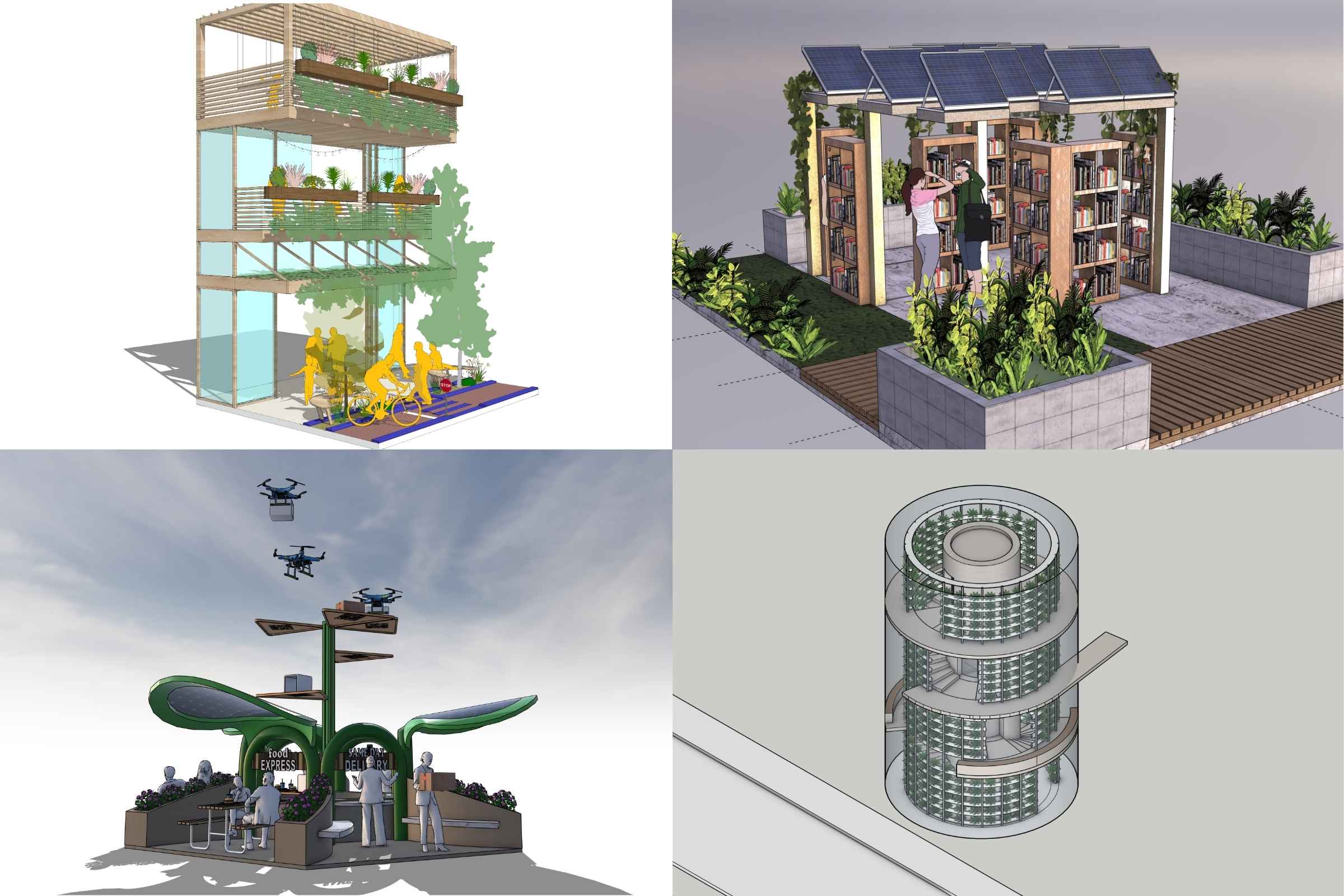
The Winning Design: Living Better, Together
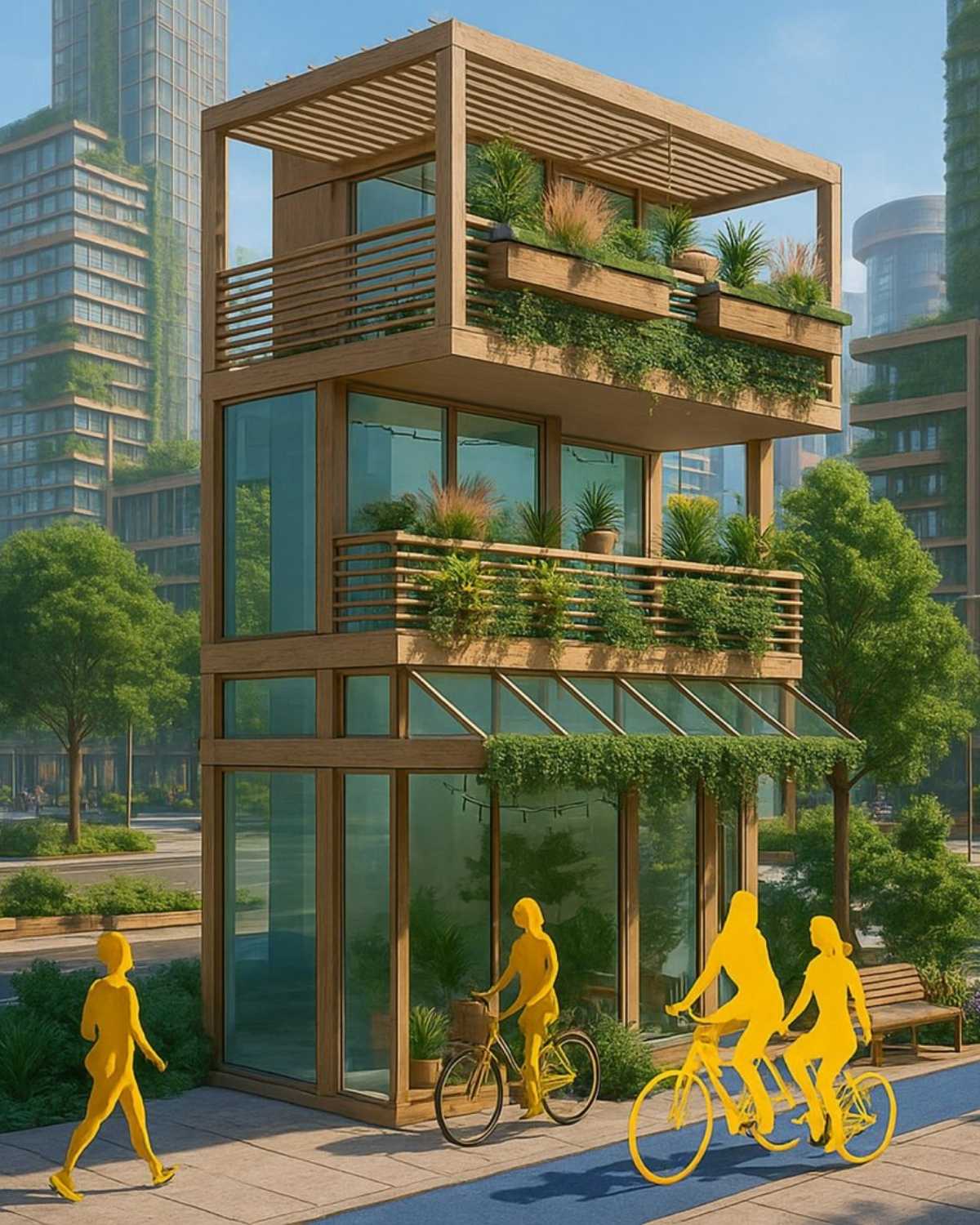
Raphaël Craverio, an architecture student at LISAA Paris, earned top honors with a highly sophisticated blueprint for conscious urban density. His rapid model addresses a fundamental challenge facing the modern practitioner: how can our high-density cities actively encourage human connection and universal accessibility?
Craverio's concept opens up the entire ground plane of the structure, widening the public sidewalks to fluidly absorb pedestrian traffic and enhance mobility across an increasingly busy urban core. The design integrates dedicated bicycle infrastructure directly into the building's footprint, while utilizing highly strategic, climate-responsive landscaping to naturally regulate temperature. Deciduous trees are placed to offer deep summer shade, casting sunlight back into the structure during winter months once the leaves drop.
"Even within a highly restricted footprint, thoughtful design can create a temporary urban refuge where movement and memory converge."
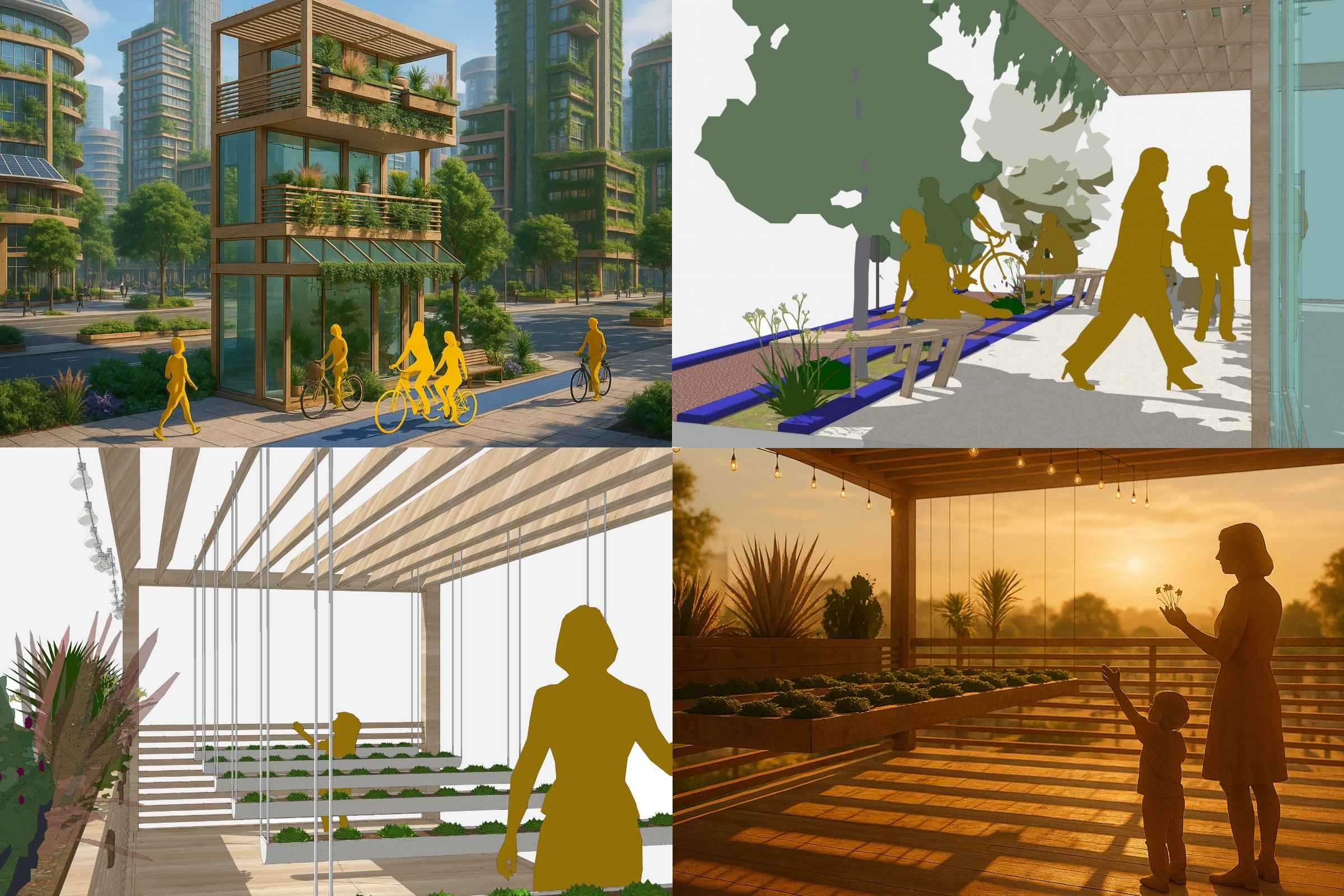
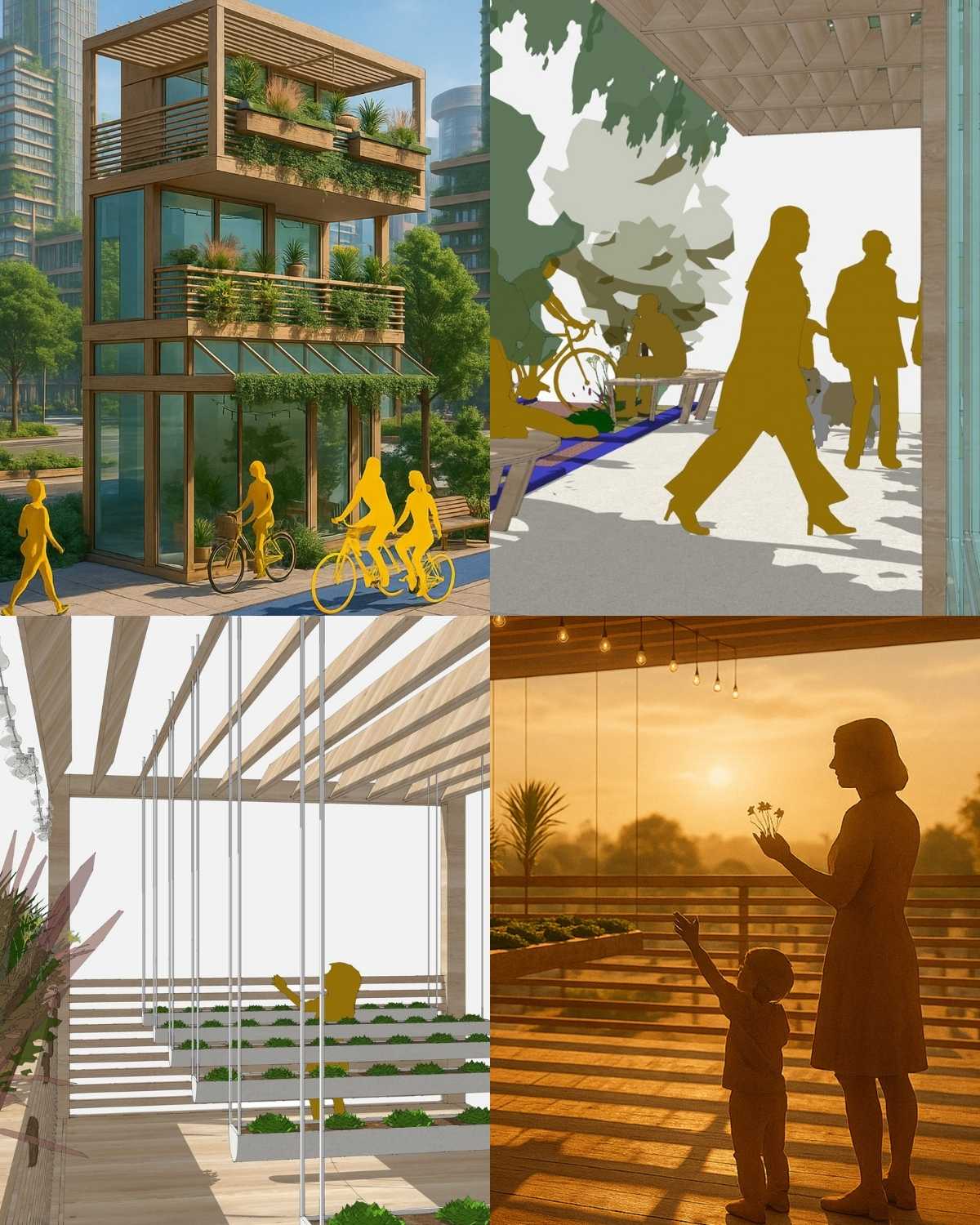
Above the living spaces, a shared communal rooftop garden empowers residents to cultivate their own food, promoting a highly responsible approach to collaborative urban living. The building's distinctive wooden roof panels are modeled to pivot dynamically, optimizing natural sunlight patterns based on daily and seasonal solar changes.
Craverio’s project stands as a beautiful example of human-centric design—proving that even the most high-speed digital sketch can lay the groundwork for a greener, more peaceful city.