.png)
Collaborations
6/17/26
.svg)
New frontiers in virtual space: The evolution of digital world-building
Charlotte Taylor: Sculpting a virtual podcast oasis
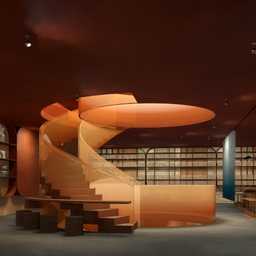
Designer Charlotte Taylor has carved out a distinct universe defined by an exquisite, meditative aesthetic. For her project, Taylor envisioned a conceptual Virtual Podcast Oasis—a sculptural, highly sensory environment specifically calibrated for slow, grounding conversation.
How contemporary creators use digital craft to experiment, shape narrative, and achieve absolute spatial clarity
The definition of architectural space is expanding. To explore this shifting horizon, we collaborated with three leading digital creators—Charlotte Taylor, Thomas Rowntree, and Tekla Evelina Severin—to uncover how visionary designers imagine, test, and materialize new forms of virtual environments.
Across these distinct design processes, the workspace becomes far more than a tool for documentation; it functions as an expansive canvas where digital craft fuels pure creative intuition.
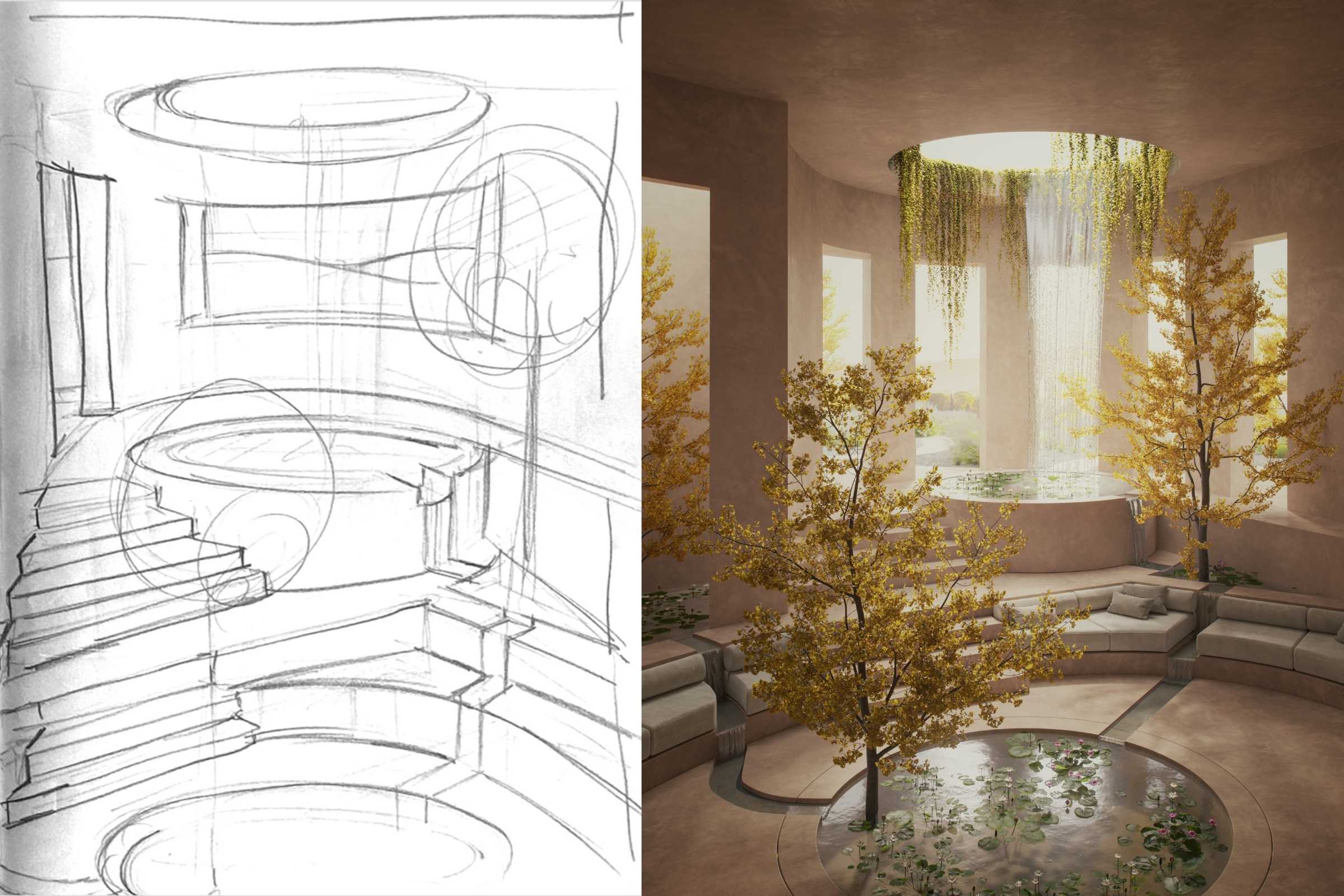
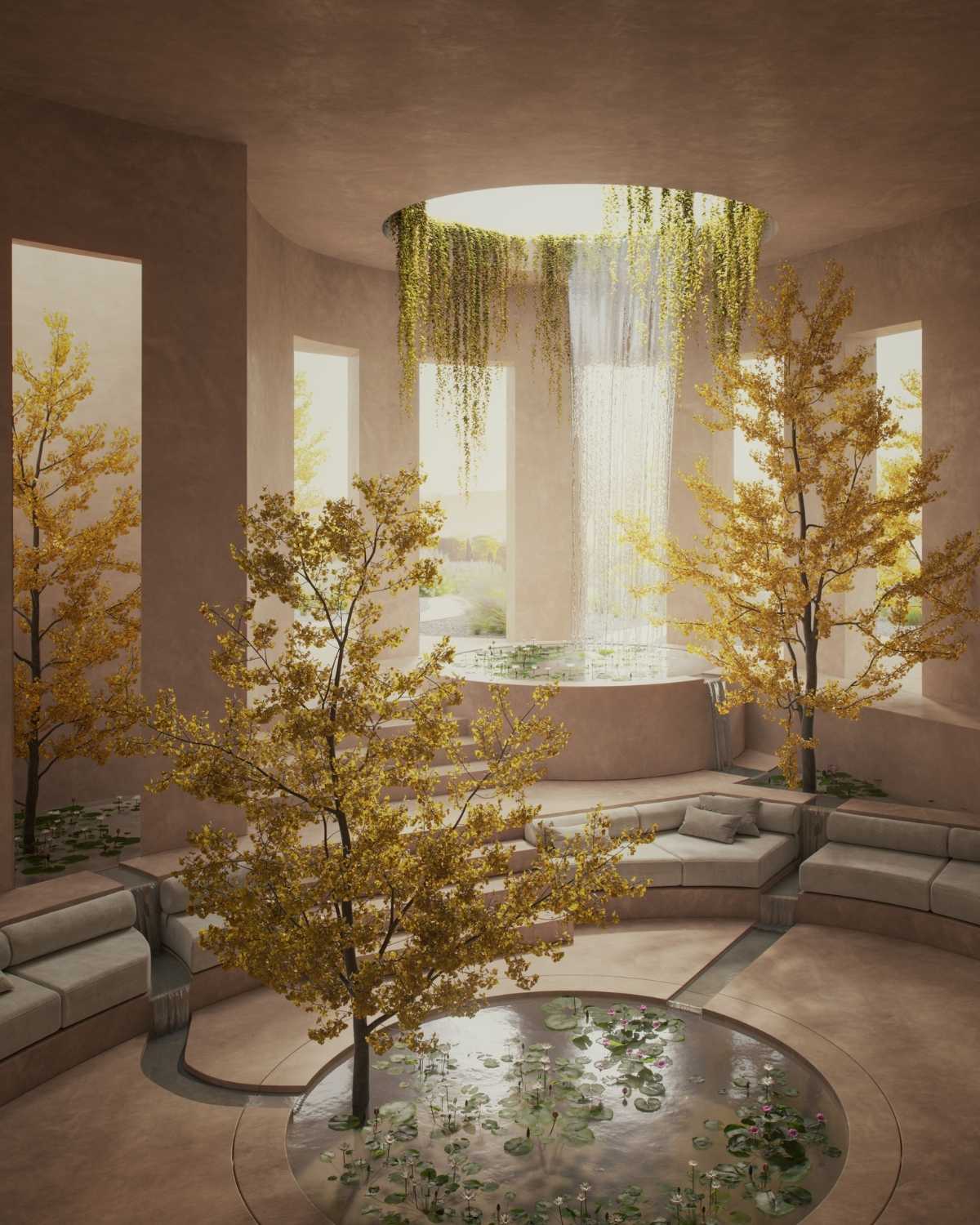

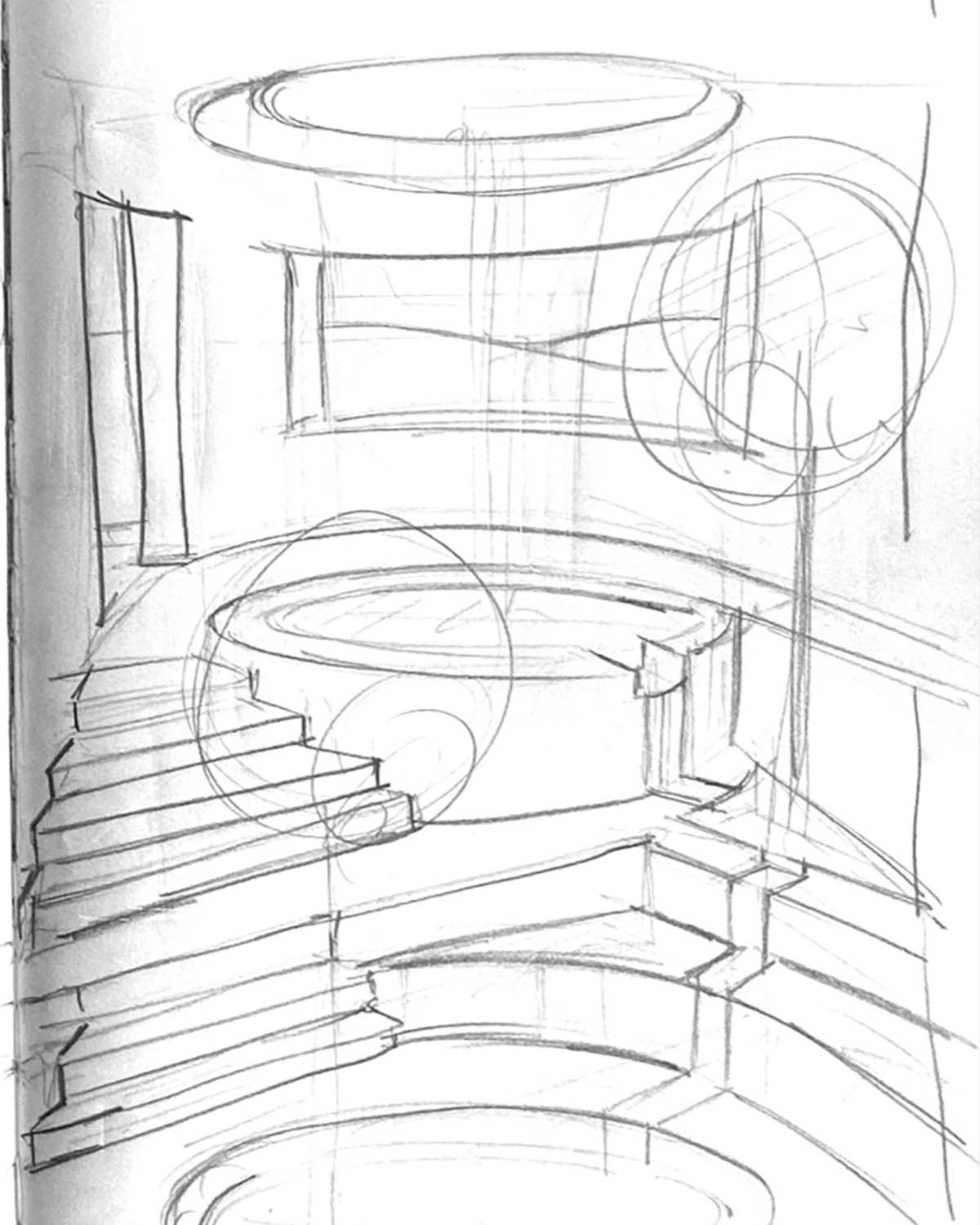
Using her modeling workspace to investigate the interplay of organic geometry and raw texture, Taylor shaped an architectural volume dictated by fluid, curved forms and a dramatic central skylight.
By layering warm, subterranean light with falling water elements, the model demonstrates how virtual architecture can deliberately dictate mood, set an emotional tone, and build a restorative physical atmosphere long before a space is ever constructed.
Listen to the Climate Salon Podcast here.
Thomas Rowntree: The hybrid architecture of AI exploration
As a designer and visual futurist, Thomas Rowntree operates directly at the intersection of technology and spatial composition. His signature workflow explores a growing hybrid approach to early-stage ideation, blending the chaotic fluidity of generative AI with structural modeling.
For Rowntree, the creative process relies on a continuous loop of high-speed iteration. While generative tools excel at sparking unexpected spatial forms, his workflow demonstrates that it requires a rigorous modeling environment to refine those ideas into a coherent architectural concept.
The 3D model provides the necessary physical baseline to test scale, light, and orientation—ensuring that creative authorship stays firmly in human hands.
Tekla Evelina Severin: Chromatic labyrinths and planned circularity
Renowned colorist, photographer, and designer Tekla Evelina Severin (Teklan) treats the digital canvas as a vital testing ground for intense visual harmonies.
For her acclaimed Solaris exhibition at Stockholm Design Week, Severin used SketchUp to choreograph a striking architectural labyrinth inspired by the sun, circularity, and an everlasting continuum.
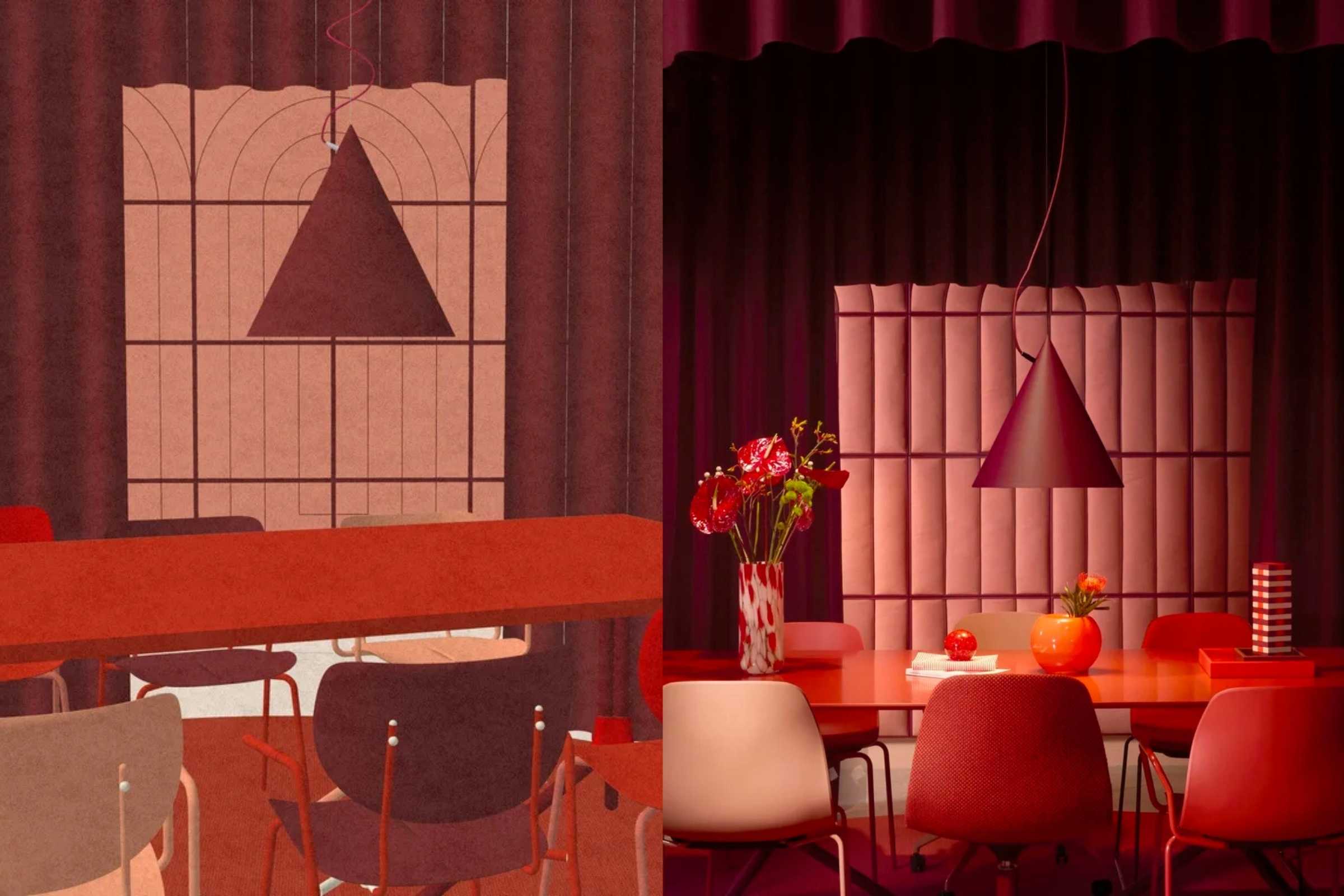
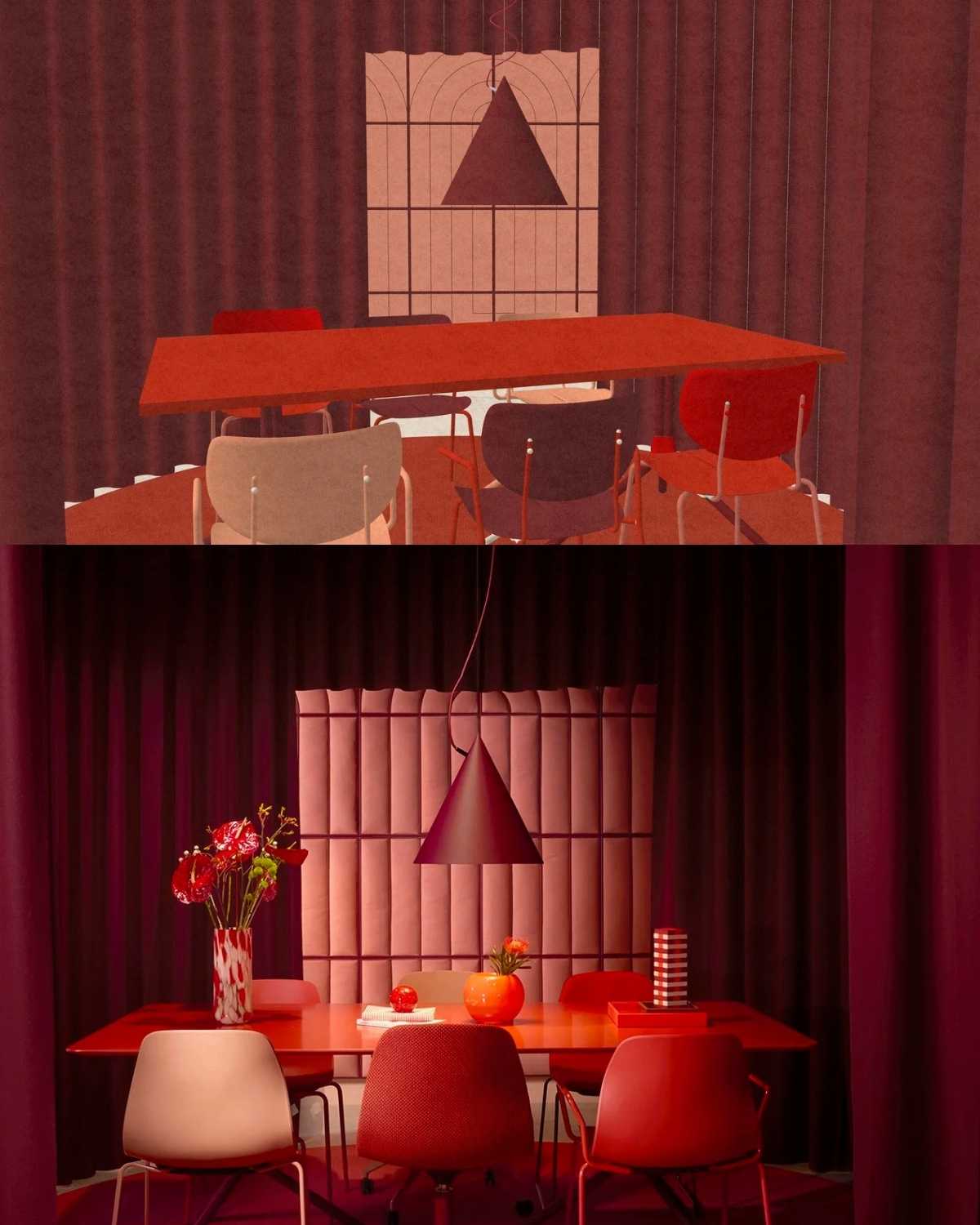
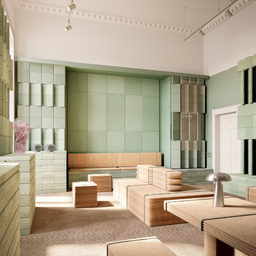
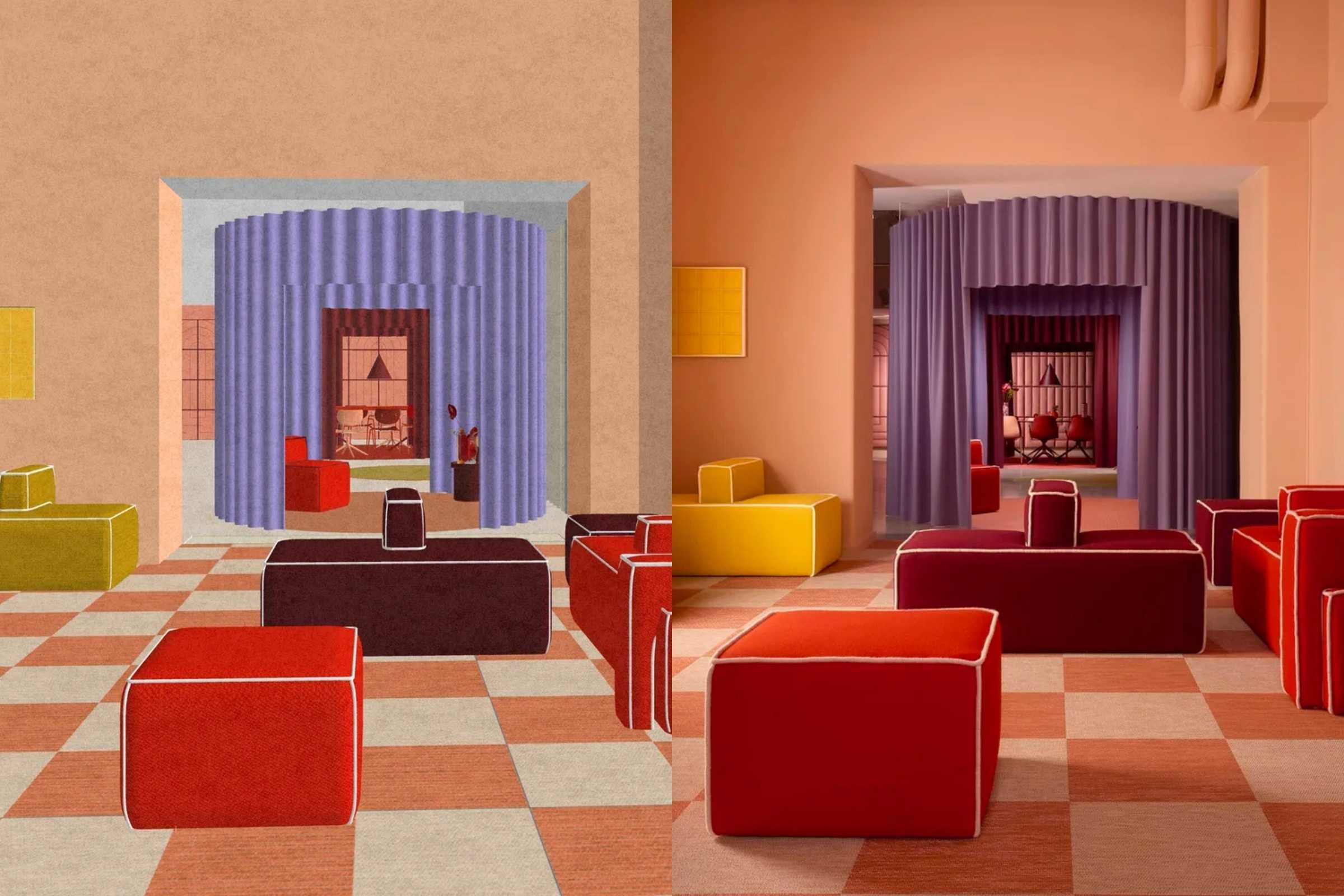
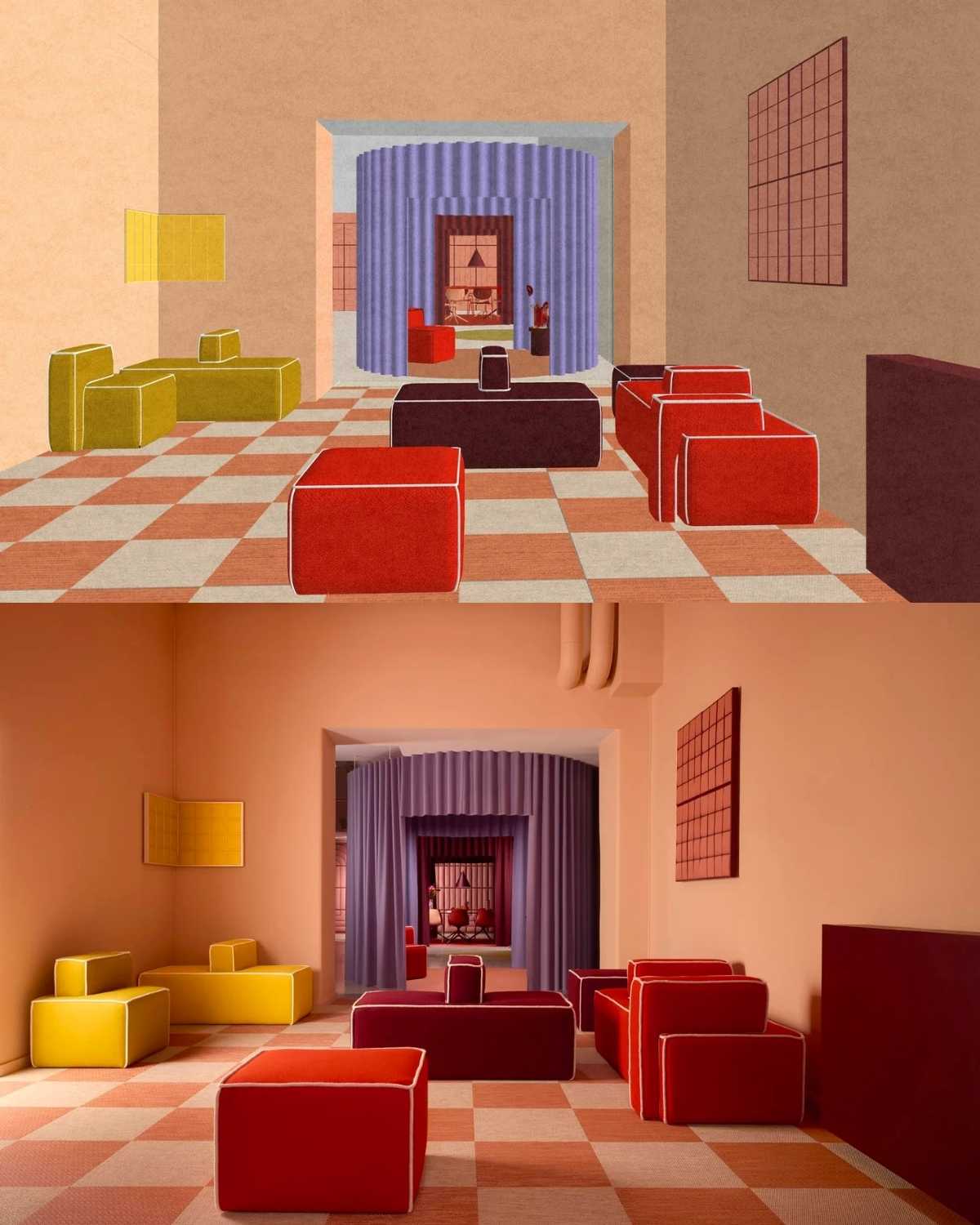
Severin’s layout spirals outward from a central point, utilizing the model workspace to map out a series of curving partition walls and unexpected visual framings. The digital sandbox allowed her to playfully clash rich burgundy curtains and pale yellow notes against checkered flooring, balancing matte and glossy finishes before bringing the massive 240-square-meter installation to life.
By executing a meticulous planned-versus-realized design process in 3D, she managed complex installation logistics and tracked material distribution. The model gave her studio the spatial safety to test contrasts between raw and refined textures, ensuring her characteristically eclectic, tactile future vision arrived on the exhibition floor with flawless precision.
A definitive shift in creative intuition
Whether designing purely digital oases, navigating automated workflows, or translating temporary physical pavilions to the gallery floor, a new generation of creators is rewriting the design rulebook. Spatial modeling is no longer a method of final representation; it is where the conversation begins.